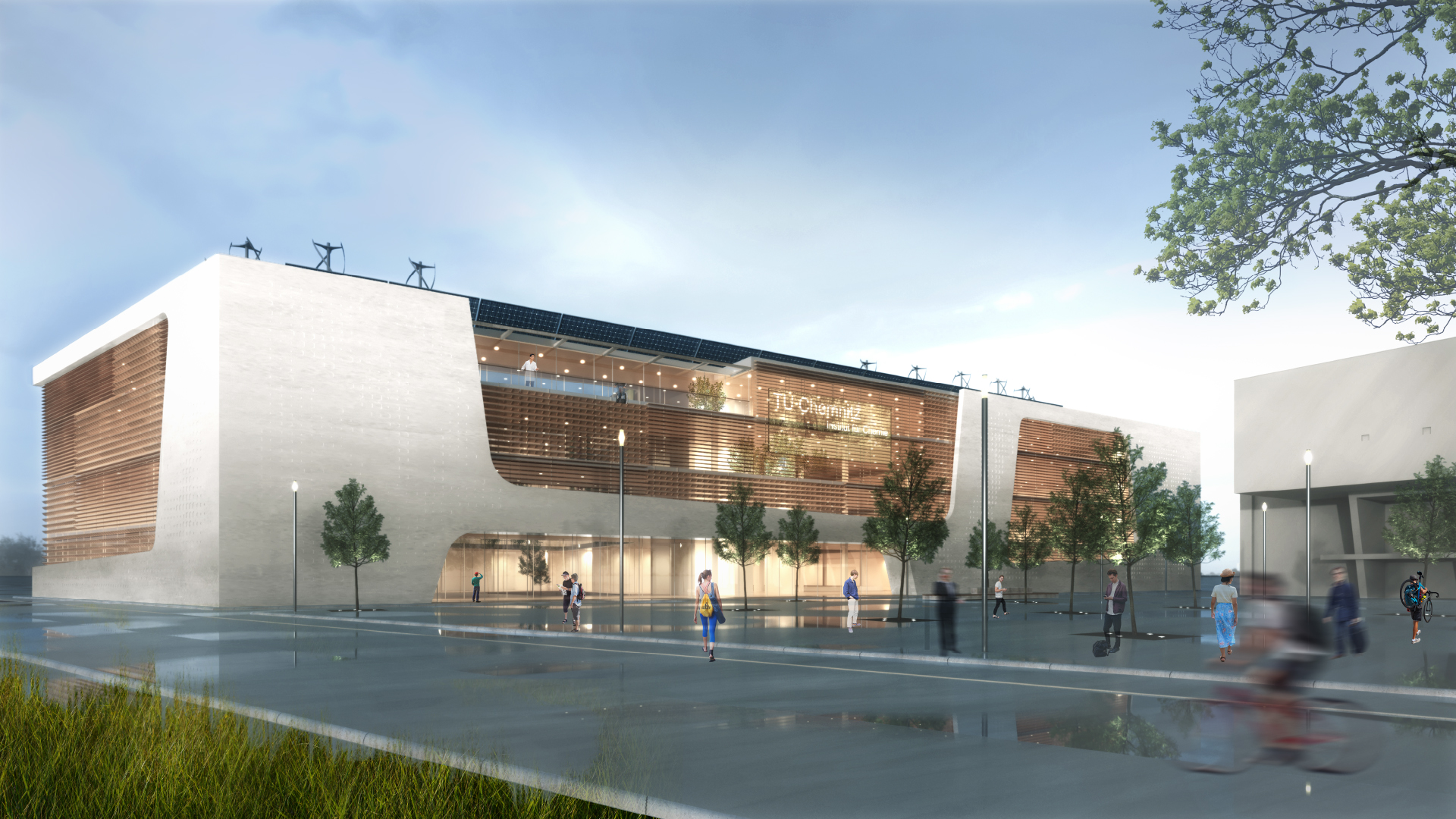

Competition entry for new Institute in Chemnitz
Design of the Institute Building for Chemistry at Chemnitz University of Technology
Innovation happens in the hallway!
In a university setting, researchers, internal and external students meet in these circulation areas and develop new ideas through low-threshold exchange.
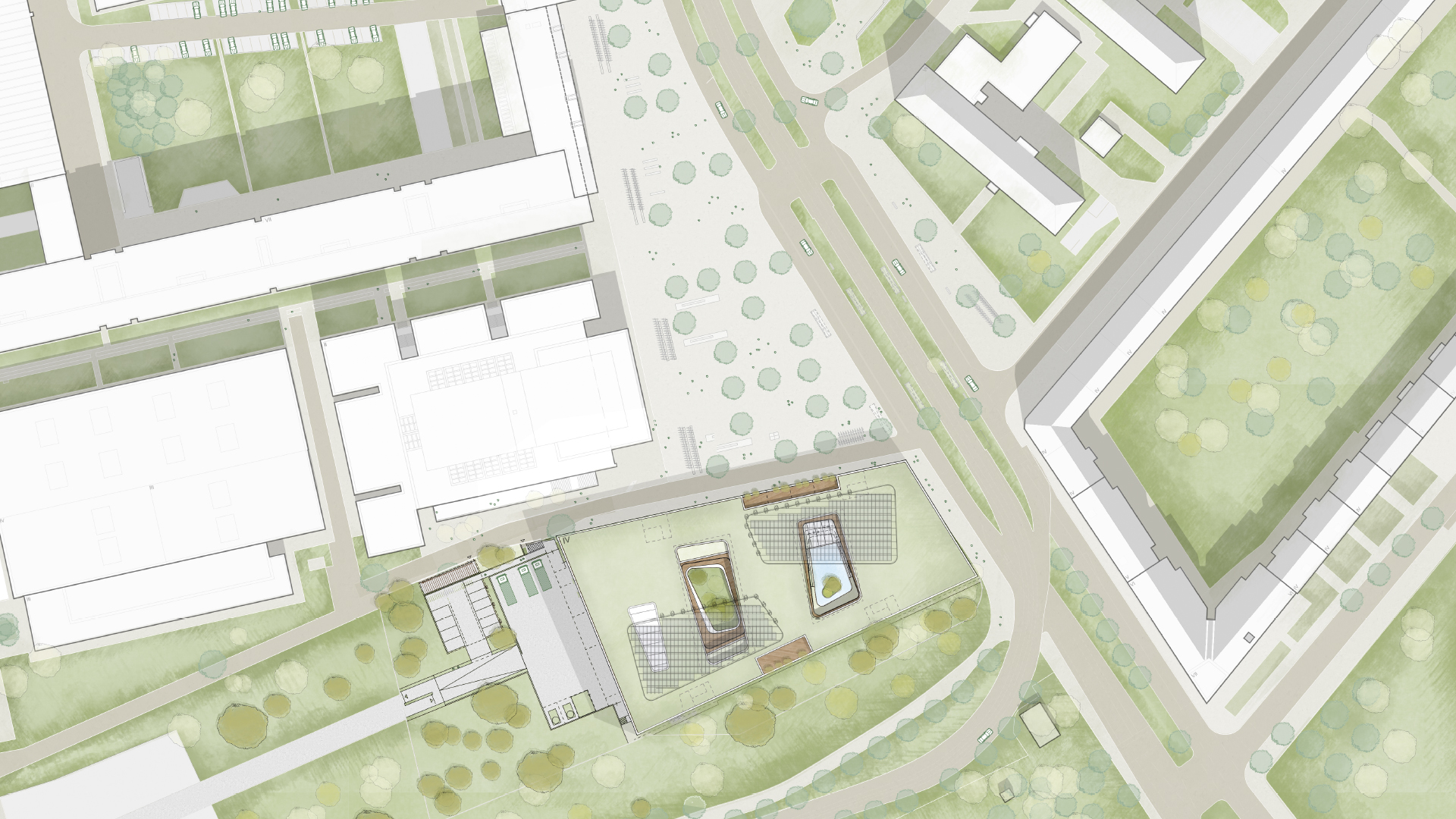
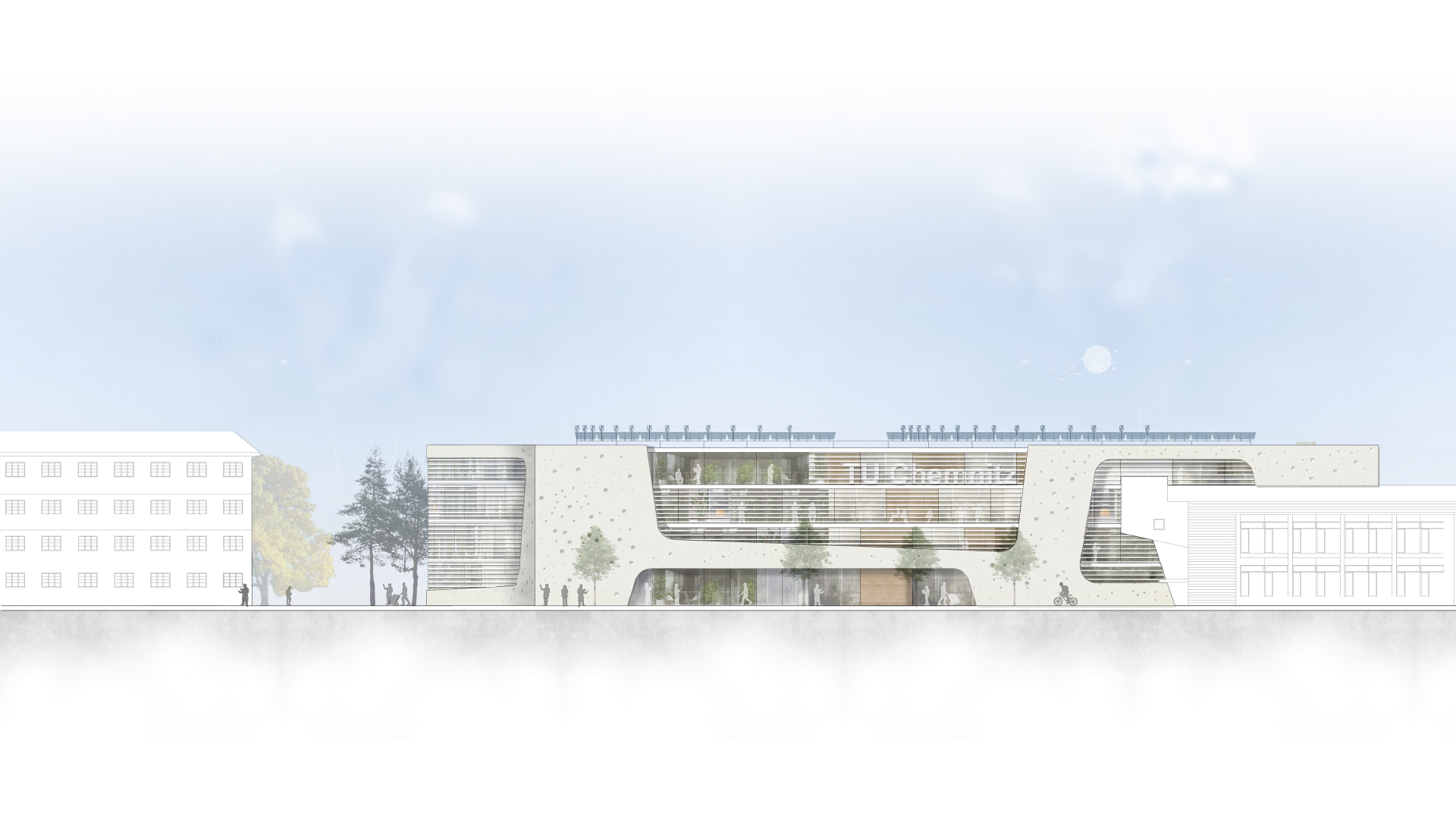
This principle guides HENKE + PARTNER in the design of the new Institute of Chemistry at Chemnitz University of Technology. In terms of urban planning, the building forms the inviting conclusion to the square and completes the university ensemble. The new building features an open-plan facade and entrance facing the public space.
The building has four floors, including a basement, and is divided into three areas: research, offices, and teaching. These areas are connected both spatially and in terms of their uses.
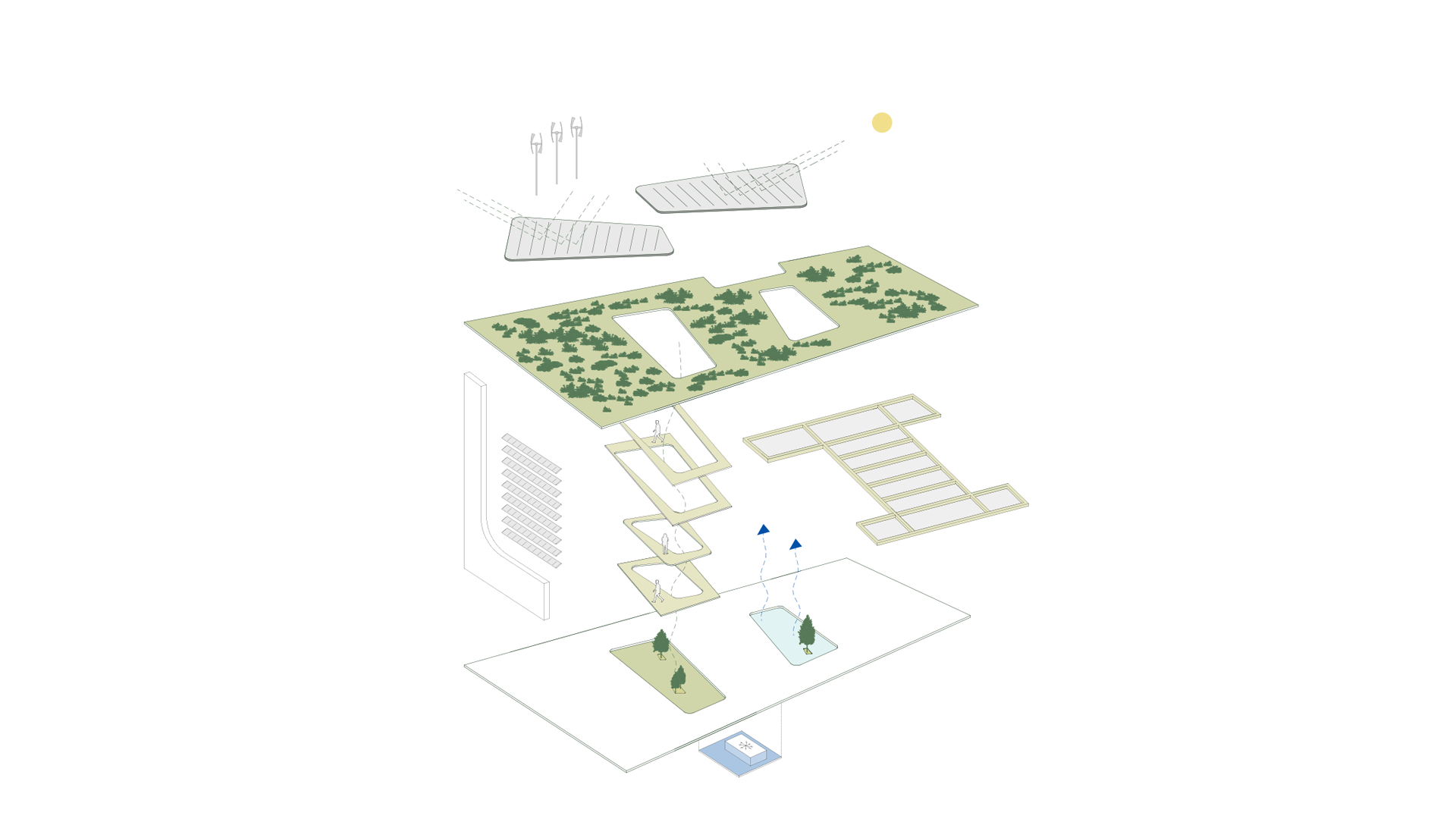
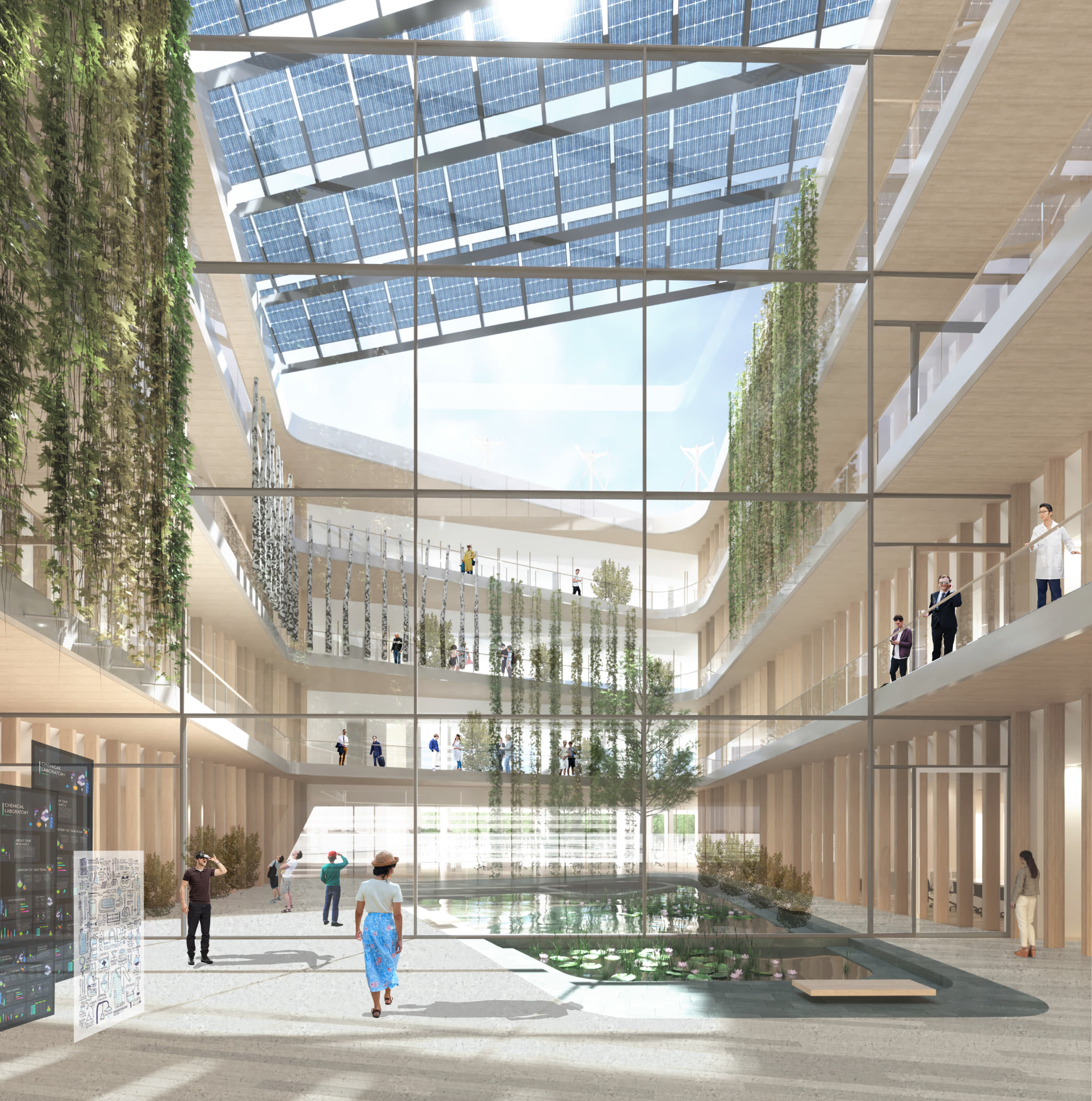
Two inner courtyards serve as a link between the functional units and bring light, air, and open space into the building. They allow a direct visual connection between the work areas and, as an informal meeting place and lounge, create a sense of togetherness within the building. This underscores the institute's concept, in which the individual fields of work operate independently while also functioning together in a network of synergies. Air spaces reflect this principle in the foyer and within the office and laboratory areas, connecting the levels vertically via open staircases.
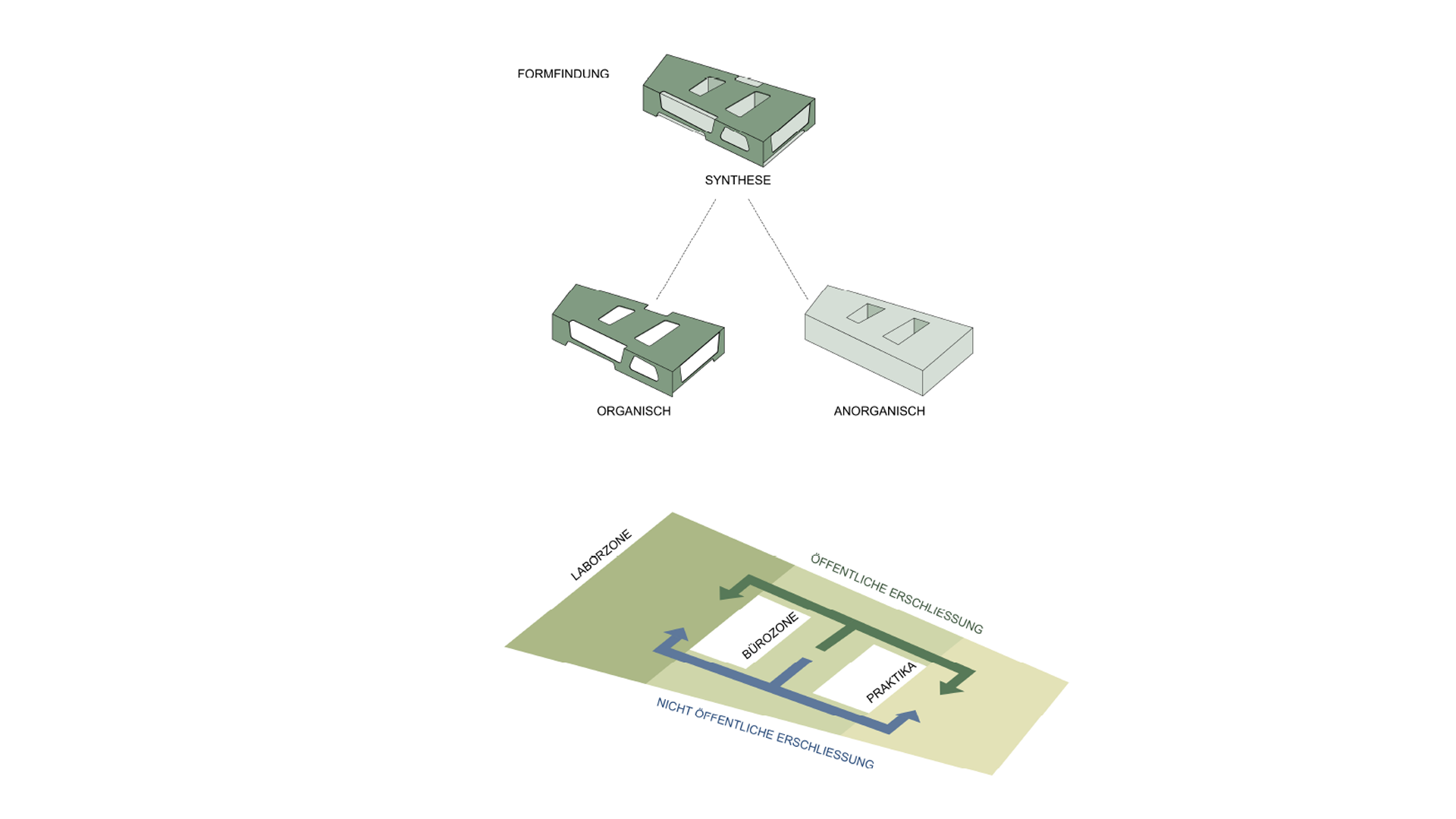
The central positioning of the institutes creates an optimal connection between the professorships and the teaching and laboratory rooms. Each floor offers both public access via the northern corridor and non-public access via the southern connecting corridor. The laboratory area and office zone feature spacious corridor extensions with various opportunities for direct or indirect exchange between teachers and researchers.
The interplay between inorganic and organic elements defines the design: the building envelope wraps itself around the solid, inorganic core of the structure like an organic element. This creates an interplay between modernity and “organic” with geometric rigour and “inorganic”.
In terms of construction, the “office zone” component is to be built using a wood-concrete composite construction method. All roof areas will be greened and activated for rainwater retention. Two large-scale PV systems on the roof and another system in the form of a pergola over the parking spaces enable renewable electricity generation. The sustainability concept is supported by several smaller wind turbines on the roof. The “Lehre” garden courtyard will have a larger water area, which can also be used as a retention area. This integration also serves to improve the natural air conditioning of the building in the summer months. The open-plan south facade will feature fixed slats with integrated solar panels, which will harness solar energy for the new building. Where possible, recycled materials made from natural fiber composites will be used on the closed facade surfaces.
Team: Markus Kasper, Richard Pfeiffer, Ali Özbilen, Anne Ortmann, Can Kabaran, Özgü Özcan





Visualisation: Masterbox